
Independent pubs, cafes, restaurants and hotels can bid for £5,000 to £25,000 from a £500,000 council fund opening on 24 August. Franchises are shut out.
Independent hospitality businesses across Harborough district can apply for capital grants of between £5,000 and £25,000 from a new council scheme that opens for applications on Monday 24 August and closes on 30 November. (Harborough District Council)
The council’s announcement did not say how much money is behind the scheme. Its own guidance for applicants does: the total pot for the Harborough District Hospitality Grant Fund is £500,000, paid for directly by the council rather than by central government. At the maximum award of £25,000 that would stretch to 20 businesses, and at the £5,000 minimum to 100. (Hospitality Grant Fund guidance for applicants, Harborough District Council)
Applications are assessed on a rolling basis as they arrive, and the council reserves the right to close the scheme early if the money is fully allocated before 30 November. In practice that makes this a first-come, first-served fund with a deadline attached, so an application in September is worth more than the same application in November.
Who can apply, and who cannot
The eligibility rules are tighter than the headline suggests. A business must be physically located in Harborough district and paying business rates to Harborough District Council, must have been actively trading for at least 12 months, and must hold a dedicated business bank account in the organisation’s name. Eligible sectors are food and beverage, pubs, cafes, restaurants, hotels, guest accommodation and leisure. Applicants must be micro, small or medium-sized enterprises employing between 1 and 249 staff, or sole traders.
Two exclusions will matter locally. Franchises are strictly ineligible, so the branded coffee shops, bakery chains and takeaway franchises in Market Harborough and Lutterworth cannot bid, and funding is limited to one grant per business per financial year. (Guidance for applicants)
What the money will and will not pay for
This is capital funding only. The council gives four worked examples: permanent awnings, all-weather seating or fixed outdoor heating for outdoor dining; high-efficiency catering equipment to expand kitchen capacity; guest room refurbishments or permanent accessibility improvements; and solar panels or smart energy management systems.
What is ruled out is just as specific: revenue spending, general operating costs, staff salaries, utility bills, rent, routine maintenance and repairs, mobile vehicles, and any project that has already started before formal grant approval. Projects must be new and completed within the current financial year unless the council formally approves an extension, and any underspend has to be returned. Grants are paid in arrears, once the project is 100 per cent complete and the spending has been verified, which means a business needs to fund the whole job up front and claim afterwards. (Guidance for applicants)
The council will pay a maximum of 75 per cent of eligible costs, so a £20,000 project needs at least £5,000 of the applicant’s own money from other business sources. A £25,000 grant, the largest available, implies a project of at least £33,333.
How bids will be marked
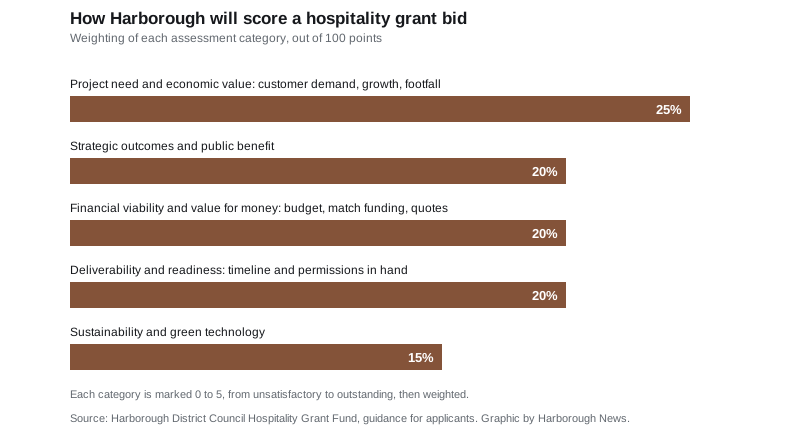
Applications that clear the eligibility checks are scored out of 100 across five weighted categories, each marked from 0 for unsatisfactory to 5 for outstanding. The heaviest weighting, 25 per cent, goes to project need and economic value, meaning evidence of local customer demand, business expansion and footfall. Strategic outcomes and public benefit, financial viability and value for money, and deliverability and readiness carry 20 per cent each. Sustainability and green technology carries 15 per cent.
The paperwork is the part most likely to catch small operators out. Every application needs a recent business bank statement, the latest Harborough District Council business rates bill, accounts covering at least 12 months of trading, proof of ownership or a valid lease plus a written letter of landlord consent where physical alterations are proposed, evidence of any planning permission or licence needed, and three written quotes from different suppliers for all items and works, with a stated rationale for the preferred supplier. Three quotes are mandatory across the whole £5,000 to £25,000 range, not just the larger bids.
Decisions are made by the council’s portfolio holder responsible for grants to communities, and the council aims to notify applicants through the online GrantApproval portal within four weeks of submission. Unsuccessful applicants get a written explanation, and all assessment decisions are final. Award recipients must acknowledge the funding and display council logos, and the council warns that grant money may be taxable.
A fund aimed at a growing visitor economy
Cllr Rosita Page, cabinet lead for business and tourism, said hospitality businesses “play an important role in the local economy, supporting employment, attracting visitors and contributing to the vibrancy of our towns and villages”, and encouraged eligible businesses to speak to the council’s economic development team before applying.
The scheme lands three weeks after the council published tourism figures showing the district’s visitor economy was worth £209.29 million in 2025, up 6.1 per cent on £197.34 million in 2024, with 2.78 million visitors and 1,865 full-time equivalent jobs supported by the sector. Day visitors accounted for £133.51 million of that spending and overnight visitors £75.78 million. (Harborough District Council, STEAM 2025 figures)
What it means for you
If you run an independent pub, cafe, restaurant, hotel or B&B in the district, the practical sequence is: contact the council’s economic development team now, get three supplier quotes and any landlord consent in writing before 24 August, and submit early rather than waiting for the November deadline. If your project needs planning permission or building control approval, that evidence has to be in hand at the point of application, so start there first; our Market Harborough planning news page explains how applications in the district are decided.
Full guidance, eligibility criteria and the application route are on the council’s grants for businesses pages and at Invest in Harborough.
For readers rather than owners, the visible result over the next year should be more covered outdoor seating, refitted kitchens and solar panels on venues you already use. Our directory of local businesses in Market Harborough and the things to do in Market Harborough page list many of the independents this fund is aimed at.
Have your say